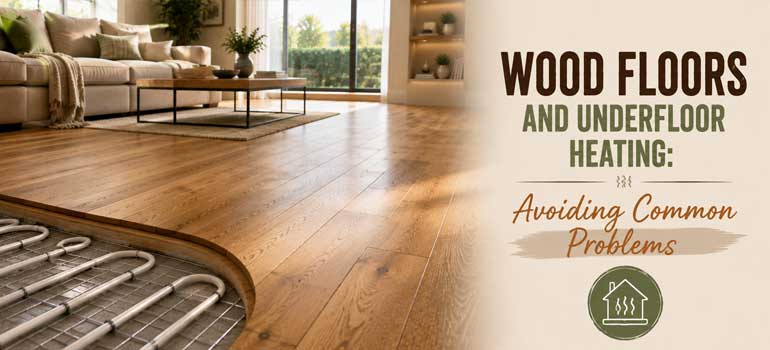
Wood flooring and underfloor heating pair well together, wood's thermal properties make it an efficient conductor of gentle, even heat, but "pairs well" comes with real conditions attached. Run incorrectly, underfloor heating (UFH) can cause genuine damage to a wood floor, and most of the problems that show up are avoidable with the right setup from the start.
Why wood reacts the way it does to underfloor heating
Wood is a natural material that continues to respond to its environment even after it's been milled into boards, expanding and contracting with changes in temperature and moisture. This is normal and manageable under stable conditions, but underfloor heating introduces a cycle: when the system is off, boards cool and, if indoor humidity runs high, can pick up moisture. When the heating switches back on, that local environment shifts rapidly, putting real stress on the boards and their fixings. Keeping the system at a consistently low, gentle temperature rather than cycling it aggressively is the single biggest factor in avoiding problems altogether.
Common problems and their causes
| Problem | Typical cause |
|---|---|
| Significant surface temperature swings | Heating cycled on and off too aggressively rather than held steady |
| Hot spots | No efficient heat-reflector plate spreading warmth evenly under the floor |
| Poor heat distribution | Inadequate system design or unsuitable subfloor layout for the room |
| High humidity around the floor | Insufficient ventilation or moisture control in the property |
| Overheating | Operating above a surface temperature of roughly 27°C |
| Water-based cleaning | Mopping with excess water while heating is active, compounding moisture stress |
What these problems lead to if left unaddressed
Left unmanaged, these issues don't stay cosmetic for long. Boards can warp as one side of the timber dries or expands faster than the other, and on engineered floors, the top wear layer can delaminate, separating from the base beneath it. In more serious cases, sections of flooring can lift entirely if they weren't fitted with UFH movement in mind from the start, and beyond the floor itself, poor heat transference from an inefficient setup means higher energy bills for less effective heating.
Getting the installation right from the start
A number of the most damaging problems trace back to decisions made before the floor is even fitted, which is why getting professional input early matters more with UFH than with a standard installation.
- Hire a professional UFH installer rather than treating it as a straightforward DIY electrical or plumbing job
- Match the system to the room, since heat output, insulation and floor area all affect what setup actually works well
- Avoid low-quality engineered wood, since cheaper products are more prone to delamination under heat stress
- Use high-quality adhesives rated specifically for UFH applications, standard flooring adhesive isn't always suitable
- Fit an efficient reflector plate to spread heat evenly and avoid hot spots forming under specific boards
- Avoid excessive, frequent temperature swings once the system is running, steady and gradual changes are far gentler on the wood
Which floor type suits underfloor heating best
This is worth being specific about: engineered wood is generally the better-suited choice for UFH installations, not solid wood. Engineered floors are constructed in layers that are more dimensionally stable under temperature changes, which makes them considerably more tolerant of the heating and cooling cycle than solid timber. Solid wood can technically be installed over UFH, but it's more prone to movement and stress under the conditions UFH creates, and most flooring professionals will recommend engineered as the safer long-term choice for this specific application.
Keeping a UFH-heated wood floor in good condition
Beyond the installation itself, ongoing care matters. Avoid mopping with excess water while the heating is active, since the combination of surface moisture and heat accelerates any stress on the boards, a barely damp mop is enough for regular wood floor cleaning. If a floor over UFH does develop wear over time, it can still be sanded and refinished like any other engineered or solid installation, though it's worth confirming with a professional that the wood floor sanding process accounts for the heating system underneath.
If you're planning a new installation over underfloor heating, or you're seeing early signs of movement or wear on an existing UFH floor, get in touch for a free, no-obligation quote and we'll advise on the right approach for your specific setup.
Frequently asked questions
Is solid wood ever suitable over underfloor heating? It can be installed, but it's more prone to movement and stress from the heating and cooling cycle than engineered wood, which is why engineered is generally the recommended choice for UFH applications.
What temperature should underfloor heating be kept at under a wood floor? Operating above roughly 27°C at the surface increases the risk of damage. A consistently low, gentle temperature is safer than higher settings or frequent large swings.
Can I mop a wood floor with UFH normally? Use a barely damp mop rather than excess water, particularly while the heating is active, since combined moisture and heat put more stress on the boards than either alone.
What causes hot spots under a wood floor with UFH? Hot spots usually occur when there's no efficient reflector plate spreading heat evenly beneath the floor, leading to some areas running hotter than others.
Can a warped board caused by UFH issues be repaired? Depending on the severity, some warping can be addressed through sanding and refinishing, though significantly warped or delaminated boards may need replacement rather than repair.