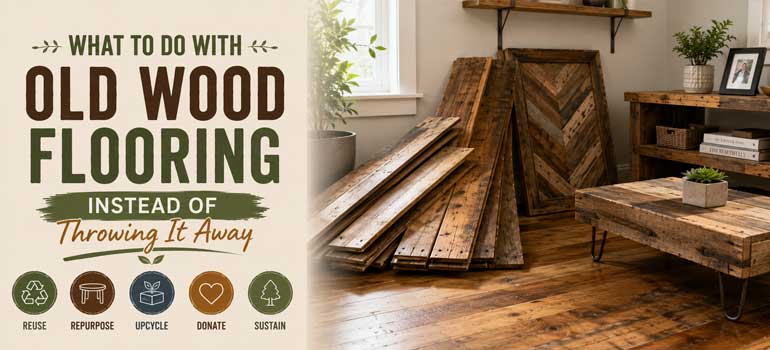
Removing a wood floor because you're changing the look, fitting underfloor heating, or simply tired of the maintenance doesn't mean the material has to end up in a skip. If the boards are still in reasonable condition, there's a genuine market for reclaimed wood flooring, and people specifically seek out the aged character and history that older boards carry, something new flooring can't replicate.
Getting the removal right matters
Before anything else, how the floor comes up affects whether it's sellable at all. Boards removed carelessly, cracked, split, or damaged during lifting, lose much of their resale value even if they were in good condition while installed. Having the floor lifted by professionals who know how to remove boards without unnecessary damage is worth the cost if you're planning to sell, since it directly protects what you can get back from the materials.
Preparing the boards for sale
A few preparation steps make a real difference to how quickly and successfully old flooring sells.
- Identify the species and grade, since buyers of reclaimed wood are often specifically after a particular timber type or character, and this information is one of the first things they'll ask about
- Measure the boards accurately, total square footage and individual board dimensions both matter to potential buyers planning a specific project
- Take high-quality photos, both close-up shots showing grain, colour and condition, and wider shots of the boards as they looked installed, giving buyers a genuine sense of what they're getting
- Note any known history, the age of the property, the room it came from, anything that adds character or provenance, since this is often part of what reclaimed buyers are actually paying for
Clear, honest documentation up front avoids disputes later and tends to result in a faster, smoother sale.
Where to sell reclaimed wood flooring
| Option | How it works | Trade-offs |
|---|---|---|
| Reclaimed flooring agencies and salvage yards | Specialist buyers actively looking for stock, often willing to view even without a prior local presence | Fastest and most straightforward route, but typically pays less than the eventual resale price they'll charge |
| Local newspaper or shop window ad | Traditional, low-cost advertising to a local audience | Can take considerably longer to find a buyer; patience is needed here |
| Online resale platforms | Broad, often nationwide or international reach for buyers | Free or low-cost to try, though managing enquiries and arranging collection takes more of your own time |
Reclaimed flooring agencies tend to be the quickest route if speed matters more than maximising price, while local ads and online platforms can potentially fetch more but require more patience and effort on your part.
Why reclaimed wood has genuine demand
It's worth understanding why this market exists at all: reclaimed flooring appeals to buyers specifically wanting an aged, characterful look that new timber can't replicate without artificial distressing. Older boards often carry patina, grain character and colour variation built up over decades, qualities that period property renovations and design-led projects actively seek out. This demand is exactly why boards in good, honestly represented condition can hold real resale value rather than simply being waste material.
If your boards need work before selling
Not every floor comes up in perfect saleable condition, and that doesn't necessarily rule out resale. Boards with surface wear but sound structure can sometimes be improved with light wood floor sanding before sale, which can meaningfully increase what a buyer is willing to pay compared with boards sold as-is with visible dulling or scratching.
If you're removing a floor and want advice on getting the boards out in sellable condition, get in touch for a free, no-obligation quote and we'll talk through the options for your specific floor.
Frequently asked questions
Is old wood flooring actually worth much money? It can be, particularly if the species, grade and condition are documented clearly and the boards were removed without damage. Reclaimed timber with genuine character often commands a fair price from the right buyer.
Should I sand old floorboards before trying to sell them? It depends on their condition. Boards with significant surface wear may sell for more after a light sand, though some buyers specifically want the untouched aged look and prefer boards as they are.
How long does it typically take to sell reclaimed flooring? This varies considerably by route. Salvage yards and reclaimed agencies can move quickly, while local ads and online listings often take longer and require more patience.
Does the species of wood affect how easy it is to sell? Yes, some species are more sought after by reclaimed buyers than others, which is part of why identifying the exact species and grade before listing is worth doing.
Is it better to sell to an agency or sell directly to a buyer? Agencies typically offer a faster, more straightforward sale at a lower price, while selling directly through ads or online platforms can potentially fetch more but takes longer and more effort to manage.