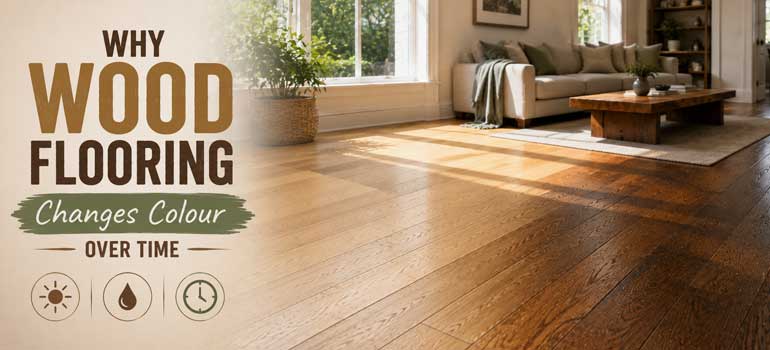
Colour change in a wood floor isn't a fault or a sign of poor quality; it's a natural property of real wood that happens to every species, just at different speeds and in different directions. Some floors mellow into a warmer, richer tone with age. Others lighten or shift toward yellow. Knowing what to expect from your specific wood species, and what actually influences the pace of the change, makes it much easier to plan around rather than be surprised by.
Why wood colour shifts at all
Wood is a natural material, and its pigments respond to light and oxidation the same way many organic materials do over time. This isn't the same process as everyday wear from scratches and foot traffic, it happens even on floors that see relatively little use, purely as a function of time and light. How much a given floor shifts depends on several factors working together: the wood species itself, how much direct sunlight the room gets, the grade of the timber, and the type of finish applied.
How different species behave
Some woods barely shift at all; others change dramatically enough to genuinely alter the room's overall tone within a few years.
| Species | Typical change | Direction |
|---|---|---|
| Oak | Moderate | Lightens a few shades, brown toward amber |
| Walnut | Significant | Lightens considerably, dark rich brown toward warm golden brown |
| Cherry | Significant | Deepens and reddens noticeably with age |
| Maple | Mild | Slight yellowing, otherwise fairly stable |
| Merbau and other tropical species | Moderate to significant | Often lightens from initial deep red-brown tones |
If you're choosing new flooring, or planning a wood floor staining project, it's worth asking specifically how the chosen species is expected to shift over the coming years, since a colour you love on day one might look noticeably different in five.
What accelerates or slows the change
A few consistent patterns show up across most wood species, and they're worth knowing whether you're trying to preserve a current colour or simply understand what's ahead.
- Yellowish undertones develop with age in most species, and this is one of the more preventable effects with the right finish
- Prime-grade wood tends to hold its colour more consistently than rustic-grade wood, which naturally contains more variation to begin with
- Flat or satin finishes stay darker for longer, while glossy finishes tend to lighten with age
- Stained floors generally hold their colour longer than floors left in their natural, unstained tone, since the pigment sits more consistently through the wood
Managing uneven fading from sunlight
Direct sunlight is the biggest single driver of uneven colour change, since it only affects the parts of a floor actually exposed to it, leaving furniture-covered or shaded areas visibly different from sun-struck ones. A few practical steps reduce this: thicker or darker blinds and curtains kept closed during peak sun hours limit direct exposure, and periodically relocating large furniture and rugs prevents the same patch of floor from staying permanently shaded while everything around it changes colour. For rooms with large windows, conservatories, kitchens with patio doors, and bright living rooms are common culprits, recoating with a UV-filtering finish slows the fading process considerably compared with a standard finish.
When colour change becomes something to address
Gradual, even colour shift across a whole floor is simply how wood ages and rarely needs any intervention. Patchy or uneven fading, particularly noticeable rug or furniture outlines, is a different matter, and this is where sanding back to bare wood and refinishing offers a genuine reset, evening the colour out across the whole room rather than living with an increasingly obvious contrast. It's also an opportunity to reconsider the finish itself; moving to a UV-protective option at that point addresses both the immediate unevenness and future fading in one project.
If your floor's colour has shifted unevenly or you'd like to understand what to expect from your specific species, our wood floor sanding team can talk through the options, including UV finishes and colour matching where needed. Get in touch for a free, no-obligation quote and we'll advise on the best route for your floor.
Frequently asked questions
Does colour change mean my floor is damaged? No, gradual colour shift is a natural property of real wood and isn't a sign of poor quality or damage, even on floors that have had relatively little use.
Which wood species changes colour the most? Walnut and cherry are among the species that shift most noticeably, often lightening or deepening considerably within just a few years, while species like maple stay relatively stable.
Can a UV finish completely stop colour change? It significantly slows the process rather than stopping it entirely, since some oxidation-driven change happens regardless of light exposure, but it makes a meaningful difference over time.
Why does my floor have a lighter patch where a rug used to be? This is uneven fading caused by sunlight reaching the exposed areas while the covered area stayed protected. Sanding and refinishing evens the colour back out across the floor.
Does a stained floor still change colour over time? Stained floors generally hold their colour more consistently than naturally finished wood, though some gradual shift can still occur, particularly with prolonged sun exposure.