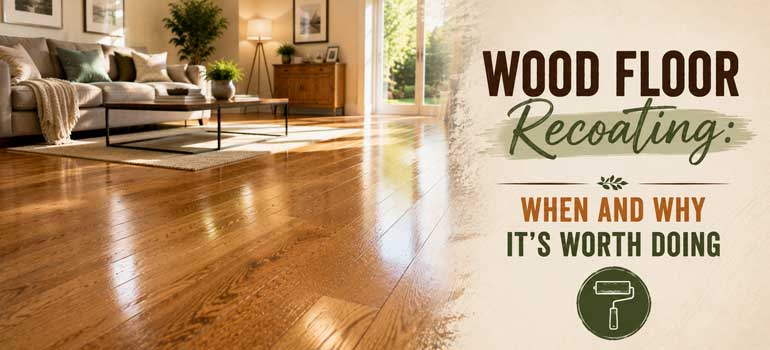
A wood floor's original shine doesn't have to be a memory. Recoating, the process of stripping and reapplying a worn wax finish, brings back the even, sleek surface a floor had when it was first installed, without the time or cost of a full sand and refinish. It's specifically the right service for wax-finished floors, and knowing whether that applies to yours is the first step before booking anything.
Why finishes wear down in the first place
The protective layer on any wood floor, whether wax, oil or lacquer, does two jobs: it gives the floor its shine and colour, and it forms a barrier between foot traffic and the bare wood underneath. Like any surface exposed to years of daily use, that layer gradually wears thin, first in high-traffic paths, eventually across the whole room. Left unaddressed, gaps, spills, and inconsistent cleaning routines all accelerate this wear, which is why proper day-to-day maintenance extends the time between recoats.
Checking whether your floor has a wax finish
Since recoating specifically applies to wax finishes, it's worth confirming this before assuming it's the right service. A simple test: wipe a small, easily hidden area, somewhere a piece of furniture normally covers, with a damp cloth. If a greyish residue transfers onto the cloth, that's a strong sign the floor is wax-finished. If nothing transfers, the floor is more likely lacquered or oiled, and different maintenance products and services apply.
How the recoating process works
Recoating follows a clear sequence, each step building on the one before it.
- Strip the old wax. The existing, worn coat is removed down to bare wood, typically using light sanding or a wax-appropriate stripping product, until no trace of the old finish remains.
- Even out the surface. Once bare, the wood needs to be flat and consistent before new wax goes on; any unevenness left at this stage will show through the finished result.
- Apply the new wax coat. Fresh wax is worked into the wood evenly, often in more than one thin layer rather than a single thick application, to build up a consistent finish.
- Buff and polish. A final buff gives the floor its uniform sheen and, just as importantly, reduces slip risk that a freshly waxed but unbuffed surface can present.
Why recoating is best left to professionals
Each stage above sounds straightforward in isolation, but getting an even result across a whole room takes practice. Uneven stripping leaves patches of old wax mixed with bare wood, which the new coat won't hide, and applying wax too thickly or unevenly creates a blotchy, inconsistent sheen rather than the smooth finish the process is meant to achieve. A professional wood floor recoating service brings both the right products and the experience to judge how much stripping and how many coats a specific floor needs.
When recoating is enough, and when it isn't
Recoating works well when the wood itself is still sound underneath, the wear is limited to the finish layer, not the timber. If you're seeing deep scratches through to bare wood, staining that's penetrated the surface, or damage beyond the finish, wood floor sanding is the more appropriate service, since recoating alone won't address damage that's gone past the wax layer. A quick way to judge: if the floor looks dull but feels smooth with no rough patches or exposed grain, recoating is likely sufficient; if you can feel damage under your hand, it probably needs more.
Combining recoating with wider floor care
Recoating works best as part of an ongoing routine rather than a one-off fix. Regular wood floor cleaning between recoats keeps grit from wearing through the fresh wax prematurely, and addressing any minor scratches or gaps as they appear, rather than waiting, means each recoat has less ground to make up.
If your wax-finished floor is looking dull and you're not sure whether recoating or a full sanding is the right call, get in touch for a free, no-obligation quote and we'll take a look and advise honestly.
Frequently asked questions
How do I know if my floor has a wax finish? Wipe a hidden area with a damp cloth. A greyish residue transferring onto the cloth generally indicates wax; if nothing transfers, the floor likely has a lacquer or oil finish instead.
Can recoating be done as a DIY project? It's possible but difficult to get an even result across a full room without experience, uneven stripping or application tends to show clearly once the new coat is buffed.
How often does a wax-finished floor need recoating? This varies with foot traffic, but many wax floors benefit from recoating every year or two, with lighter maintenance in between to extend the interval.
Does recoating fix scratches in the wood? Not deep ones. Recoating addresses the worn finish layer, but scratches or damage that have gone into the wood itself need sanding rather than recoating alone.
Is recoating cheaper than a full sand and refinish? Yes, generally. Since recoating works only with the existing finish layer rather than the wood itself, it's typically quicker and less costly than a full sanding.