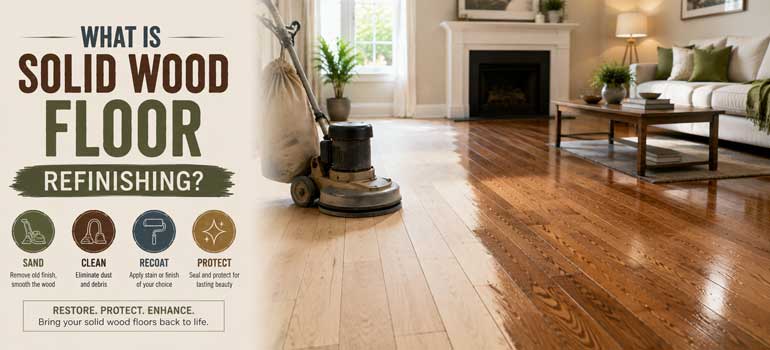
Refinishing is the umbrella term for the process that takes a dull, scratched or tired-looking solid wood floor back to something close to its original condition. It's not one single treatment but a small sequence of steps working together, and understanding what each part actually does makes it much easier to know what you're paying for, or taking on yourself, if you're considering it.
Why solid wood specifically supports repeated refinishing
Solid wood boards are made from one continuous piece of timber, not a thin layer over a base material, which is exactly what makes refinishing possible more than once across a floor's life. Most solid wood floors can be refinished up to around 7 times over their lifespan, depending on the original board thickness, age, and how much material previous treatments have already removed. With proper care between refinishes, a solid floor can realistically stay in excellent condition for up to a century, which is a genuine practical advantage over materials that can only be treated once or twice, if at all.
When refinishing is actually needed
The clearest sign it's time is a worn-through protective finish, once that layer has broken down, the bare wood underneath is directly exposed to moisture, dirt and continued wear, which accelerates further damage if left unaddressed. Refinishing at this point does two things at once: it removes the accumulated scratches, discolouration and general wear, and it re-establishes the protective barrier that was doing the real work of keeping the floor safe in the first place.
DIY versus professional sanding
This is worth being honest about upfront, since it's a genuine fork in the road for anyone planning a refinish. Sanding, the first and most involved stage of refinishing, can technically be attempted with a rented machine, and some confident DIYers do achieve a reasonable result. But it's a job where mistakes are hard to hide and harder to undo: uneven pressure leaves visible dips, missed spots leave old scratches showing through the new finish, and getting the edges and corners right generally needs a separate tool most rental kits don't include. Professional floor sanding costs more upfront than a DIY attempt, but for most people it's the difference between an even, professional-looking result and one with visible flaws that are expensive to correct afterwards.
What the refinishing sequence covers
Sanding removes the worn top layer, taking the surface back to bare, level wood and opening the grain so subsequent products can bond properly. From there, staining is entirely optional, worth doing if you want to shift the floor's colour, and works best applied straight after sanding while the wood's pores are freshly open for even absorption. Wood floor staining should always be tested on a small hidden area first, since the same product can look different depending on the specific wood. Finishing comes last and is what actually protects everything the previous steps achieved; a polyurethane finish is a common recommendation for its durability and long-lasting sheen, though other options suit different priorities depending on the room.
How refinishing frequency relates to a floor's lifespan
Because each refinish removes a small amount of material, the total number of times a floor can be refinished is finite, even though it's generous for solid wood. This is why a light maintenance refinish, addressing surface dullness without cutting deeply into the wood, is worth distinguishing from a full refinish that removes deeper scratches and staining. Using the lighter option when it's enough preserves more of the floor's total refinishing capacity for future years, which is worth discussing with whoever's doing the work rather than defaulting to the heaviest treatment every time.
If your solid wood floor's finish has worn through and you're weighing up DIY versus professional refinishing, get in touch for a free, no-obligation quote, and we'll assess what your floor actually needs and talk through the realistic options.
Frequently asked questions
How many times can a solid wood floor realistically be refinished? Most solid wood floors support up to around 7 refinishes over their lifetime, though this depends on the original board thickness and how much material earlier treatments have already used.
Is DIY sanding a bad idea for every solid wood floor? Not necessarily for small, low-stakes areas, but for main living spaces or floors with existing character worth preserving, professional sanding avoids the visible unevenness that's common with DIY attempts.
Does refinishing always mean changing the colour? No, staining is entirely optional as part of refinishing. Many refinishes simply restore the existing colour and protection without changing the shade at all.
What's the difference between a light and a full refinish? A light refinish addresses surface dullness without deep sanding, while a full refinish removes deeper scratches and staining. The lighter option, when appropriate, preserves more of the floor's total refinishing capacity.
Why is polyurethane often recommended as a finish? It's valued for being hard-wearing and long-lasting with a durable sheen, though it's one of several finish options and the right choice depends on the room and how it's used.