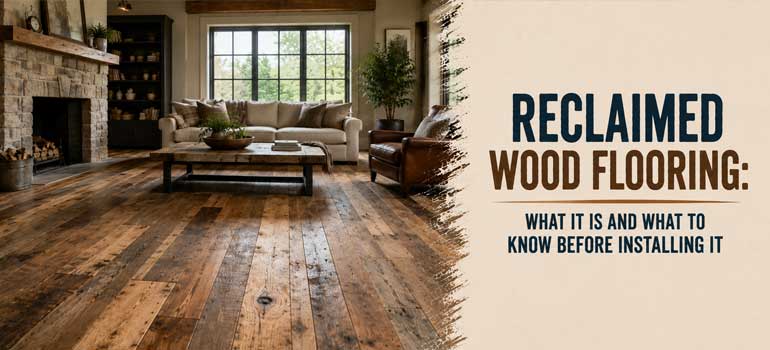
Reclaimed wood flooring has grown steadily in popularity over recent years, and the questions that come with it are worth answering properly before committing to a project. Reclaimed hardwood is made from timber recovered from barns, farmhouses, old factories and other older buildings, sources like bay flooring, granary boards, roof rafters, floor joists and structural beams are all commonly repurposed into flooring. Beyond the character it brings to a room, it's also a sustainable choice, giving old timber a new purpose rather than adding demand for freshly felled wood.
What subfloors reclaimed wood works over
Reclaimed wood isn't limited in where it can be installed compared to new timber. It can be successfully fitted over radiant underfloor heating, concrete, and below-grade subfloors, the same range of options available to new wooden flooring. The one area that really differs is acclimatisation, and it matters more here than with new materials.
Why acclimatisation takes longer for reclaimed wood
New engineered wood typically needs only a few days to acclimatise to a room's temperature and humidity before installation. Reclaimed wood is a different story, since it's already settled into the environment of wherever it came from originally, it can take two to three weeks to properly adjust to its new home. Skipping or rushing this period is a real risk: the wood can start shrinking or expanding after installation as it continues adjusting, leading to gaps or other movement-related issues that are far more disruptive to fix once the floor is down.
How installation actually differs from new wood
Beyond the longer acclimatisation period, the installation process itself takes more time and attention than fitting new boards. Reclaimed planks aren't uniform the way freshly milled timber is, each board can vary in width, thickness, and condition, which means more careful fitting and sometimes additional treatment to get boards sitting properly within a room. This extra time is part of what makes reclaimed wood a different kind of project than a standard new installation, but it's also exactly what gives the finished floor its distinctive, characterful look that new timber simply can't replicate.
Finishing a reclaimed wood floor
There's no meaningful difference between finishing reclaimed wood and finishing new timber. Whichever look you're after, glossy or completely matt, UV-protected for a sun-exposed room, or built for high-traffic durability, the same range of finishing options apply. This is worth discussing with a professional if you're unsure what suits your specific reclaimed timber, since older wood species and grain patterns can sometimes take stain or finish slightly differently than fresh-cut boards of the same species.
What to weigh up before choosing reclaimed wood
Reclaimed wood isn't for everyone, but the reasons come down to personal taste rather than practical drawbacks. The maintenance and care a reclaimed floor needs is no different from a new hardwood floor, regular cleaning and periodic wood floor sanding keep it performing just as well over time. The real decision is aesthetic: some people love the character, variation and history reclaimed wood carries, while others prefer the more uniform, predictable look of new timber. Neither preference is wrong, it's simply a matter of what suits your space and taste.
Getting the sourcing right
Since reclaimed wood's whole appeal rests on its authenticity and condition, sourcing from a reputable supplier who can confirm the timber's origin and condition matters more here than with standard new flooring. A supplier who can speak clearly to where the wood came from, how it's been treated, and what condition it's actually in gives you a much better basis for planning acclimatisation time and anticipating how the installation will go.
If you're considering reclaimed wood flooring for your home and want advice on acclimatisation, installation, or finishing, get in touch and request a free quote and we'll talk through what your specific project needs.
Frequently asked questions
Can reclaimed wood be installed over underfloor heating? Yes, reclaimed wood can be installed over radiant underfloor heating in the same way new timber can, though proper acclimatisation before fitting remains important regardless of subfloor type.
Why does reclaimed wood need longer to acclimatise than new timber? Reclaimed wood is already settled into the humidity and conditions of wherever it came from, so it needs more time, typically two to three weeks, to adjust to its new environment before installation.
Does reclaimed wood flooring need special maintenance compared to new wood? No, the ongoing care and maintenance is the same as any hardwood floor, regular cleaning and periodic sanding keep it in good condition over time.
Can reclaimed wood be finished in any style, or is it limited? It can be finished in the same range of styles as new timber, glossy, matt, UV-protected, or high-traffic durable finishes, depending on your preference and the room's needs.
Is reclaimed wood more expensive than new hardwood flooring? This varies by source and species, but the longer acclimatisation period and more careful installation process can add time and cost compared to a standard new installation.