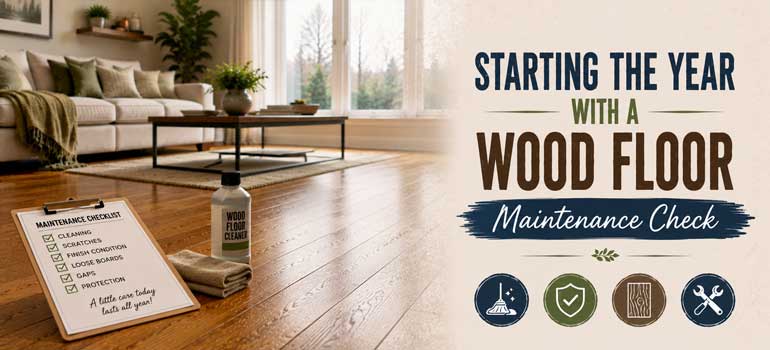
The start of a new year is when a lot of household maintenance gets planned, and a wood floor is worth adding to that list even if nothing looks obviously wrong. Most of what causes real problems down the line - worn finish, small gaps, early signs of moisture damage - starts out invisible to anyone without a trained eye, which makes an annual check well worth the time rather than just a nice-to-have.
Why an annual inspection is worth the time
A professional wood floor sanding assessment doesn't need to happen every year, but a general inspection is worth doing annually regardless of whether the floor looks fine on the surface. Technicians who work with wood floors daily can spot early signs of finish wear, subtle gapping, or the start of moisture-related issues well before they're visible to an untrained eye, and catching these early is almost always cheaper and less disruptive than waiting until they've become obvious problems.
What tends to need attention after a year of use
A year of normal use leaves marks that build up gradually rather than all at once: scratches from furniture and foot traffic, small dents, minor staining, and a general dulling of the finish across high-traffic areas. None of this is unusual, and none of it means the floor needs replacing. It's simply the accumulated result of everyday life, and it's exactly the kind of wear that sanding and refinishing addresses directly.
Getting the floor properly reset
If a year of wear has left the floor looking tired, sanding strips away the accumulated scratches, marks and worn finish in one process, levelling the surface back to something close to how it looked when new. This isn't a lengthy or especially disruptive project for most rooms, which makes the start of the year a sensible time to get it booked in before the busier months ahead. Once sanded, wood floor staining is worth considering too if you've been thinking about a colour change, since freshly sanded wood takes stain more evenly than a floor treated later.
Finishing properly protects the work
Refinishing after sanding isn't optional if you want the work to actually last. A fresh coat of lacquer or oil seals the newly sanded surface and gives it the durability to handle another year of normal wear before needing attention again. Skipping this step, or delaying it, leaves the bare, freshly sanded wood exposed and vulnerable in the meantime, which defeats much of the purpose of sanding in the first place.
Lighter maintenance for floors that don't need a full sand
Not every floor needs a full sand every year, and for floors that are holding up reasonably well, lighter wood floor maintenance such as polishing or a light recoat can extend the time before a full sand becomes necessary. This is worth discussing during the annual inspection, since a professional can tell you honestly whether your floor needs the full process this year or would benefit more from a lighter refresh.
Planning saves money and disruption
Addressing wear on a schedule, rather than waiting until problems are impossible to ignore, generally costs less overall and causes less disruption to the household. A floor with early-stage gapping or finish wear is a straightforward job; the same floor left untreated for several more years, with boards potentially cupping or staining penetrating deep into the wood, becomes a bigger and more involved project. Planning improvements at the start of the year, rather than reacting once problems are visible, is simply the more efficient approach.
If it's been a while since your floor had a proper look-over, get in touch for a free, no-obligation quote and we'll assess what, if anything, it needs this year.
Frequently asked questions
Do I need a full sand every year? No, many floors only need a full sand every several years depending on wear. An annual inspection can confirm whether lighter maintenance is enough for now.
What's the benefit of scheduling floor care at a set time each year? It turns floor maintenance into a routine rather than a reaction, making it easier to catch small issues early and generally keeping costs lower over the floor's lifetime.
Can sanding and refinishing be done quickly, or does it disrupt the house for long? Most residential rooms can be sanded and refinished within a matter of days, making it a manageable project to plan for rather than something requiring extensive disruption.
Is it worth changing my floor's finish or colour during an annual refresh? If you've been considering a change, sanding is the ideal time to do it, since the wood's pores are freshly opened and take stain or a new finish more evenly than an untreated surface.
What happens if I skip refinishing after sanding? The freshly sanded, bare wood is left exposed and vulnerable to staining, moisture and further wear until it's sealed, so refinishing shouldn't be delayed once sanding is complete.