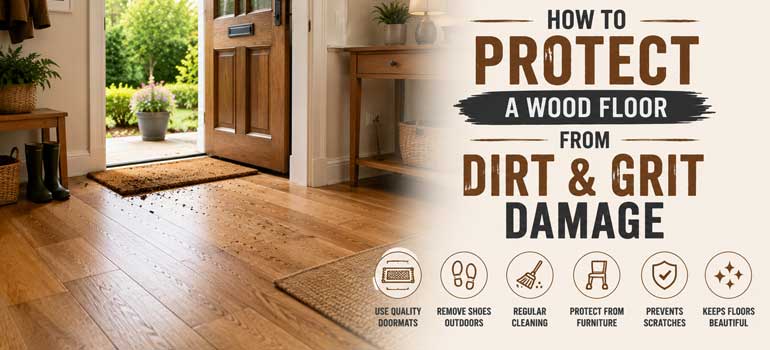
Dirt itself doesn't damage a wood floor, but the tiny particles of grit and sand carried in with it do. Every time shoes cross a floor with grit underfoot, those particles act like fine sandpaper, gradually scratching through the finish and, eventually, into the wood itself. It's one of the most common causes of premature wear, and almost entirely preventable with a few consistent habits.
Why grit is more damaging than it looks
Dust on its own is mostly harmless to a wood floor. The problem is the mineral grit mixed into everyday dirt, tiny particles of sand, stone and hard debris tracked in from outside, which are considerably harder than the finish layer protecting the wood. Every footstep that grinds grit against the surface removes a microscopic amount of finish, and over months and years that adds up to visible dulling and fine scratching, particularly along well-used paths like hallways and in front of doorways. The finish is the only thing standing between that grit and the bare wood, so protecting the finish is really the whole strategy.
Start at the door
Most grit enters a home the same way: on the bottom of shoes. A doormat outside every entrance, and ideally a second one just inside, catches a significant amount of it before it ever reaches the floor. Going shoe-free indoors removes the problem almost entirely, though it's a habit that takes some adjusting to. Where that's not realistic, felt pads under a shoe rack or a boot tray by the door at least contains the mess to one manageable spot rather than letting it spread through the house on the soles of shoes.
Rugs and mats do more than decorate
Placed at entrances, in front of kitchen sinks, and anywhere with heavy foot traffic, rugs and runners work as a second line of defence, trapping grit before it reaches open floor. Choose rugs with a breathable, non-rubber backing where possible; solid rubber-backed mats can trap moisture against the finish and cause discolouration over time, which defeats the purpose. It's also worth shaking out or vacuuming doormats and rugs regularly, since a saturated mat stops catching new dirt and starts grinding the trapped grit against the floor underneath it instead.
Build a cleaning routine that matches your traffic
There's no single correct cleaning schedule, it depends on the household, pets, and how much traffic the floor sees, but the principle stays the same regardless of frequency: remove grit before it gets walked into the finish.
- Sweep or dry-mop with a soft-bristled tool rather than a stiff broom, which can scratch as much as it cleans
- Vacuum with a hard-floor attachment, not a beater-bar brush designed for carpet, which can scuff a wood surface
- Use a barely damp mop, never a wet one, and always with a clean mop head; a mop that's already carrying grit from a previous clean just drags it across the floor again
- Pay extra attention to entrances and high-traffic paths, where grit accumulates fastest
Furniture and everyday movement matter too
Beyond grit specifically, dragging furniture across a floor, or letting chair and table legs sit without protection, causes its own kind of damage that compounds with grit wear over time. Felt pads under furniture legs, lifting rather than dragging heavy items, and keeping castors clean of trapped debris all reduce the load on the finish alongside a good grit-prevention routine.
Choosing a finish that holds up better to grit
Not every finish wears the same way under grit exposure. Harder-wearing lacquers, such as Bona Traffic HD, are formulated specifically for high-traffic resistance and tend to show grit wear more slowly than softer, more natural-look finishes. If your floor sees heavy daily traffic, hallways, entranceways, homes with several pets, it's worth discussing finish options with a professional at the point of sanding rather than defaulting to whatever was used previously.
If your floor has already picked up dulling or fine scratching from years of grit exposure, sanding is the only way to genuinely reset the surface rather than just slow further wear. Our wood floor sanding service can assess the damage and recommend a finish suited to how the floor is actually used, and our floor maintenance service covers ongoing care between sands. Get in touch for a free, no-obligation quote.
Frequently asked questions
Is dust itself harmful to a wood floor? Not on its own. The real damage comes from grit, hard mineral particles mixed into everyday dirt, which acts abrasively against the finish as it's walked over.
Are rubber-backed mats bad for wood floors? They can be. Solid rubber backing traps moisture against the finish, which may cause discolouration over time. Breathable-backed mats are generally a safer choice.
How often should doormats be cleaned? Regularly, ideally shaken out or vacuumed weekly. A saturated mat stops catching new grit and can start grinding trapped particles against the floor underneath it.
Does going shoe-free indoors really make a noticeable difference? Yes, since most grit enters on the soles of shoes, removing them at the door significantly cuts down how much reaches the floor in the first place.
Can a harder-wearing finish reduce grit damage? Yes. Traffic-rated lacquers are formulated to resist wear better than softer finishes, which is worth discussing with a professional if your floor sees heavy daily use.