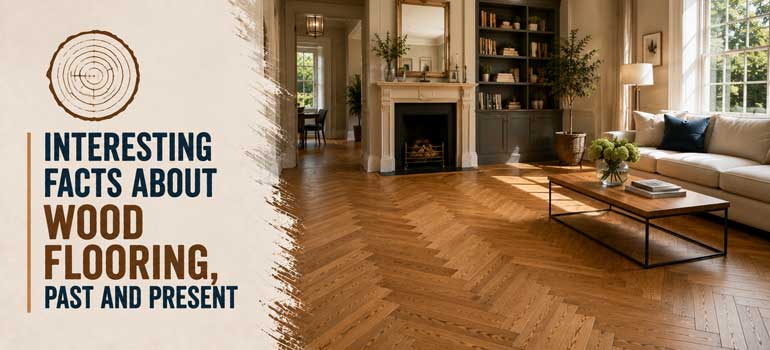
Wood flooring has a longer and more interesting history than most people walking across it every day realise. From its origins as a luxury alternative to marble through decades of changing maintenance methods and shifting popularity, understanding how hardwood got to where it is today adds some real context to a material that's become a modern staple in homes and businesses alike.
Where hardwood flooring began
Hardwood flooring first emerged as an alternative to marble in wealthy homes in France in the late 1600s, offering similar elegance with different practical qualities. From there it gradually spread into more homes over the following centuries, moving through periods of rising and falling popularity while remaining a recognisable marker of quality and style. Today, hardwood spans an enormous range of design styles, from rustic and traditional through Scandinavian minimalism to modern urban interiors, which is part of why it's remained relevant across so many different eras of interior design.
How maintenance technology changed everything
Hardwood's practicality has improved dramatically since its early days, largely due to changes in how it's maintained.
| Era | Maintenance approach |
|---|---|
| Before the 1920s | Manual scraping and labour-intensive upkeep, no mechanised sanding available |
| 1920s | The first electric sander introduced, making an even, uniform finish achievable without manual scraping |
| 1940s | Standard maintenance involved professional installation, sanding, and at least two coats of shellac or wax, requiring refinishing as often as weekly |
| 1950s | Shellac and wax finishes gradually replaced by lacquer and polyurethane, offering far more durable protection |
| Present day | A properly refinished floor can last for years between treatments, a dramatic improvement on weekly maintenance cycles |
This progression matters beyond historical curiosity: it explains why hardwood, once considered high-maintenance compared to newer flooring options, is now low-maintenance by comparison, largely thanks to better finish products and more efficient sanding technology.
The carpet era and hardwood's comeback
Hardwood's popularity actually dipped during the carpet boom of the 1960s, as many people grew tired of the frequent maintenance older wood floors demanded. Manufacturers responded by developing more efficient, time-saving sanding and finishing methods, which set the stage for hardwood's steady return to popularity in the decades that followed. It's a useful reminder that hardwood's current low-maintenance reputation isn't accidental, it's the direct result of decades of technological improvement responding to real consumer frustration.
Facts worth knowing
A few specific facts stand out for anyone considering or already owning a hardwood floor:
- Red Oak is the industry benchmark used for comparing the relative hardness of different wood species, making it a useful reference point when researching durability
- Around 90% of real estate agents report that hardwood floors add measurable value to homes, helping properties sell faster and for higher prices than comparable homes without it
- Solid wood floors can typically be refinished up to around 10 times over their lifespan, looking freshly restored after each treatment, which is a large part of why solid wood remains such a durable long-term investment
What this history means for floor owners today
Understanding this background is more than trivia, it explains why modern sanding and refinishing is such an efficient, worthwhile service compared to the demanding upkeep hardwood once required. A floor that might have needed weekly attention decades ago can now go years between full wood floor sanding treatments, thanks to durable modern finishes and improved sanding equipment.
If you're curious what condition your own hardwood floor is in, or want to make the most of how far modern refinishing technology has come, get in touch and request a free quote and we'll assess your floor and talk through the options.
Frequently asked questions
Why was hardwood flooring originally considered a luxury? It emerged as an alternative to marble in wealthy homes in the late 1600s, offering a similarly elegant look with different practical properties, which established its early reputation as a premium flooring choice.
How much did the invention of the electric sander actually change hardwood maintenance? Significantly. Before mechanised sanding, floors relied on manual scraping, which was labour-intensive and gave far less consistent results than the even finish an electric sander can achieve.
Why did hardwood lose popularity during the 1960s carpet boom? Many people grew tired of the frequent maintenance older wood floors required, weekly refinishing was common decades earlier, which made carpet feel like a lower-maintenance alternative at the time.
Is Red Oak actually the hardest wood species available? No, Red Oak isn't necessarily the hardest species, it's used as the standard benchmark for comparing hardness ratings across different woods, which is a different thing from being the hardest itself.
Does refinishing really add resale value to a home? Real estate industry surveys commonly report that hardwood floors help homes sell faster and for more money, making refinishing a worn floor a reasonable investment ahead of a sale.