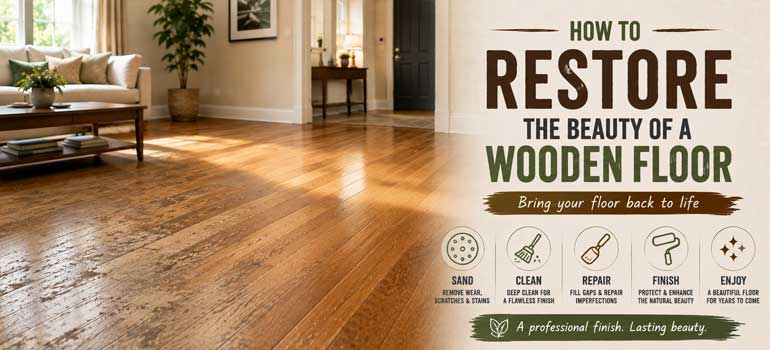
A wood floor's appeal was probably a big part of why it was chosen in the first place: the grain, the natural colour variation, the way it changes character with light through the day. None of that disappears when a floor gets worn, it's just buried under years of dulled finish, surface scratches and built-up grime. Restoring the look is less about masking the wear and more about removing it entirely, which is what sanding and refinishing actually does.
Start with an honest assessment
Before any sanding begins, it's worth checking that the floor is a genuine restoration candidate rather than one with underlying problems that need addressing first. Loose boards, structural movement, or active pest damage all need sorting out before cosmetic work starts, since sanding over a problem doesn't fix it, it just hides it temporarily. Once the floor's structure is confirmed sound, whether it's solid wood, engineered or parquet, the restoration itself can begin.
Sanding removes the years, not just the dirt
Every real wood floor can be sanded, though the approach depends on the floor's age, current condition, and how many times it's been treated before. This stage strips away the accumulated surface damage in one pass: scratches, stubborn stains, discolouration and dirt build-up all come off with the old, worn finish, leaving smooth, bare wood underneath. It's the single step that does the most visible transformation in the whole process, since everything that made the floor look tired is physically removed rather than covered over.
Screening prepares the surface for finish
Once sanded, the floor benefits from screening with a fine mesh pad, a step particularly important on parquet floors where cross-grain patterns mean the sanding machine can't always leave a perfectly consistent surface across every block. Screening evens this out and ensures the wood is genuinely ready to accept finish evenly, rather than absorbing it unevenly in patches where the grain direction differs.
Building up the finish in layers
A primer coat of lacquer goes on first, and once that's dry, the main finishing product and any colour pigment can be applied. Buffing lightly between coats is what gives a genuinely flawless final result, smoothing out any texture between layers so the finish reads as one continuous surface rather than several separate coats. This is also the stage where a floor's colour can be shifted entirely if that's the goal, staining after sanding gives a far more even result than trying to change colour on a floor that hasn't been sanded first, since the pores are freshly opened and ready to take pigment consistently. If a full colour change isn't what you're after, options like wood floor recoating or a simple reoiling can refresh the existing tone without altering it.
Keeping the restored look for longer
Once a floor's been sanded and refinished, a bit of ongoing care keeps that fresh look going for years rather than months. Routine wood floor cleaning and occasional polishing between full sands protects the new finish from the everyday grit and wear that dulled it the first time round, and catching a small scratch or stain early is always easier to deal with than waiting for it to spread across the whole floor.
If your floor has lost its shine and you're not sure whether it's a full restoration or a lighter refresh it needs, our floor sanding team can assess it properly, and our floor repair service handles any structural issues that need sorting first. Get in touch for a free, no-obligation quote and we'll talk you through what your floor actually needs.
Frequently asked questions
Can any wood floor be restored, or are some too far gone? Most floors can be sanded and refinished, but the floor's age, condition and sanding history all affect what's realistic. A professional assessment is the best way to know for sure.
Why is screening needed if the floor has already been sanded? Screening with a fine mesh pad evens out any remaining inconsistencies, particularly on parquet where grain direction changes block to block, ensuring the finish absorbs consistently across the whole surface.
Can I change my floor's colour during restoration? Yes, staining after sanding gives the most even result, since the wood's pores are freshly opened and ready to absorb colour consistently across the floor.
How many coats of finish does a restored floor usually need? This varies by product and floor type, but a primer coat followed by one or more finishing coats, with light buffing between each, is typical for a smooth, even result.
How long does a sanded and refinished floor keep its new look? With a reasonable cleaning routine and occasional polishing between full sands, a restored floor can hold its appearance for several years before it needs sanding again.