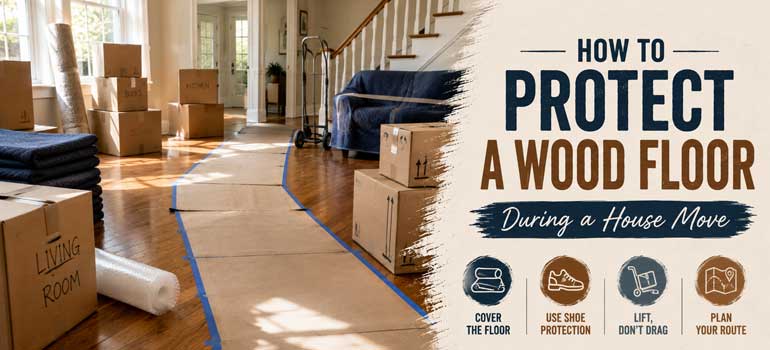
Moving day understandably focuses attention on the furniture and boxes, but the floor underneath all that activity takes a genuine beating if it isn't protected properly. Heavy items dragged across the surface, muddy shoes on wet days, and the sheer volume of foot traffic in and out of the property all add up to real risk for a wood floor that took years to look the way it does. A few preparations beforehand make a significant difference to how the floor looks once the move is done.
Cover the floor before anything moves
Before furniture starts coming in or out, covering vulnerable areas is worth doing properly rather than as an afterthought. A few options work well depending on the space and how much traffic it'll see:
- Absorbing protective mats, which can be cut to fit any room or hallway and offer solid protection against both scuffing and moisture
- Non-adhesive, slip-resistant runners, which cling to the floor surface without leaving residue and work well for high-traffic paths like hallways and entrances
- Cardboard or hardboard sheeting, taped down carefully at the edges, for particularly heavy-traffic zones like the main route furniture will travel
Covering the whole path furniture will realistically take, not just the room itself, avoids gaps where damage can still happen along the way.
Never drag furniture or heavy objects
Dragging is one of the most reliable ways to leave deep, obvious scratches and dents, and a protective cover reduces but doesn't eliminate this risk if items are still being dragged rather than lifted. If something can't be carried, use proper furniture sliders designed for the purpose rather than pushing it directly across the surface, even a covered one. This applies just as much to lighter furniture, chairs and small tables dragged even occasionally will eventually scratch through, so fitting felt or rubber padding to the feet is worth doing before the move rather than after damage has appeared. Skipping this step is one of the more common reasons people end up needing wood floor sanding sooner than expected after a move.
Be extra cautious in wet or muddy weather
There's rarely a perfect time to move, and rainy or muddy conditions add a real risk that's easy to overlook amid everything else going on. Mud, dirt, and especially standing water or moisture tracked in on shoes are bad for wood flooring, and asking movers and family to remove shoes isn't always realistic during a busy moving day. A large, absorbent mat at every entrance the move is using catches a meaningful amount of this before it reaches the floor, and having towels on hand to wipe up tracked-in moisture quickly during particularly wet weather is a simple, low-cost precaution.
Protecting the floor once furniture is back in place
The protection shouldn't stop the moment the move is over. Once furniture is repositioned in its new spot, fitting felt pads under legs prevents the everyday shifting and scraping that happens as furniture gets used and occasionally nudged, which causes slow, cumulative scratching rather than one dramatic incident. It's also worth doing a proper inspection of the floor once everything's settled, checking corners, doorways and the main traffic paths specifically, since minor scuffs are far easier and cheaper to address while they're still minor.
If damage has already happened
Even with careful preparation, moves are chaotic, and it's not unusual for a scratch or scuff to slip through despite best efforts. Isolated marks can often be addressed with a wood scratch repair service rather than requiring anything more extensive, while more widespread scuffing across the floor might be a sign it's time for a broader wood floor polishing refresh once the move is fully settled.
If your floor has picked up damage during a recent move, or you'd like advice on protecting it ahead of an upcoming one, get a free quote and we'll assess what your floor needs.
Frequently asked questions
What's the best type of floor covering to use during a move? Absorbing protective mats and non-adhesive runners both work well, offering scratch and moisture protection along the specific paths furniture will travel through the property.
Do furniture sliders really make a big difference? Yes, they allow heavy items to be moved without dragging directly on the floor, which is one of the most common causes of deep scratching during a move.
Should I worry about lighter furniture like chairs during a move? Yes, even light items dragged repeatedly can scratch a floor over time. Felt or rubber padding on the feet reduces this risk both during the move and afterward.
How can I protect the floor from mud and rain on moving day? A large absorbent mat at every entrance being used, combined with keeping towels on hand for quick clean-up, reduces how much moisture and dirt actually reaches the floor.
What should I do if the floor gets scratched during a move despite precautions? Isolated scratches can often be treated with a targeted repair rather than a full refinish, though it's worth having the floor assessed if scuffing appears more widespread.