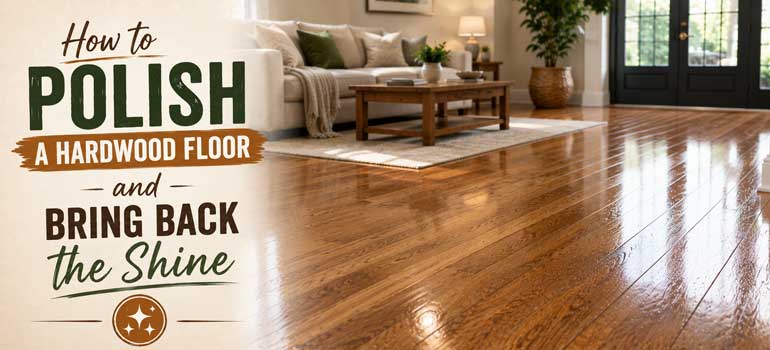
A dull, tired-looking wood floor doesn't always need sanding to look better. Polishing sits between everyday cleaning and a full sand: it addresses the kind of surface dullness that regular mopping can't shift, without removing any material from the wood itself. Knowing when polishing is the right call, and how the process actually works, saves both time and money over jumping straight to a heavier treatment.
Why floors dull even with good cleaning
A consistent cleaning routine keeps grit and dirt off a floor, but it doesn't fully counteract the gradual wear that even light daily use causes to a finish's surface. Over months and years, the top layer of finish picks up fine scratching and loses some of its original sheen, even on floors that are looked after well. This is a normal stage in a wood floor's life, and it's exactly what polishing is designed to address before the wear progresses to the point where sanding becomes necessary instead.
Polishing versus sanding: knowing which one you need
Polishing works on the existing finish layer, restoring shine and evening out light surface wear without cutting into the wood. Sanding goes further, removing the old finish entirely along with a thin layer of wood, and is the right call once there are scratches through to bare wood, staining that's penetrated the surface, or damage polishing simply can't reach. As a rough guide: if the floor looks dull but feels smooth and undamaged to the touch, polishing is usually the answer; if you can feel roughness, gouges, or see bare patches, wood floor sanding is the more appropriate service.
What polishing actually involves
The process differs slightly depending on the existing finish, but generally follows a consistent sequence.
Buffing first prepares the surface, smoothing out fine scratches and removing loose surface residue before any new product is applied. For wax-finished floors specifically, it's often worth removing the old wax layer entirely before reapplying, since built-up old wax can prevent a fresh coat from bonding evenly. This is typically done with a mineral spirit product, which needs careful ventilation given the fumes involved, and isn't something to rush through in an enclosed room.
Once the surface is clean, completely dry, and free of old residue, the new finish goes on in thin, even layers using a clean cloth or applicator, working in small sections at a time to keep the coverage consistent rather than patchy. Letting each layer dry fully before the next is what avoids a cloudy or uneven final result. A final buff once the finish has cured is what actually produces the visible shine, this last step matters more than people expect, since an unbuffed final coat can look flat even when applied correctly.
Choosing between wax, oil, and lacquer maintenance products
The right polishing product depends entirely on your floor's existing finish, using the wrong type can cause real problems rather than just an ineffective shine. Wax-finished floors need a wax-based maintenance product; applying wax over a lacquered floor, or lacquer-based polish over an oiled one, generally won't bond properly and can leave a hazy or patchy result. If you're not sure what finish your floor currently has, it's worth checking before buying a product, or asking a professional to confirm during an assessment.
Combining polishing with wider maintenance
Polishing works best as part of a broader routine rather than a one-off fix. Regular wood floor cleaning between polishing sessions keeps grit from undoing the work, and where the floor also has minor damage worth addressing, combining a wood scratch repair with the polishing visit is usually more efficient than treating them as separate projects. For floors on a longer maintenance cycle, occasional wood floor recoating extends the time between full sands even further.
If your floor's finish is looking flat and you're not sure whether it needs polishing or a full sand, get in touch for a free, no-obligation quote and we'll give you an honest recommendation based on the actual condition of your floor.
Frequently asked questions
How do I know if my floor needs polishing or sanding? If the floor looks dull but feels smooth with no visible bare patches or deep scratches, polishing is usually enough. Roughness, gouges or exposed wood point to needing a full sand instead.
Can I use any polishing product on my floor? No, the product needs to match your floor's existing finish. Wax, oil and lacquer maintenance products aren't interchangeable, and using the wrong type can leave a hazy or uneven result.
How often should a hardwood floor be polished? This depends on foot traffic and finish type, but many floors benefit from polishing roughly once or twice a year to maintain shine between full sanding cycles.
Is DIY polishing realistic, or should I hire a professional? Light polishing is achievable for a confident DIYer, particularly for smaller areas, but the process does need attention to detail, and a professional is worth considering for larger or more heavily worn floors.
Does polishing remove scratches? Fine surface scratches can improve noticeably with buffing and polishing, but deeper scratches that have broken through the finish need sanding or a targeted repair rather than polishing alone.