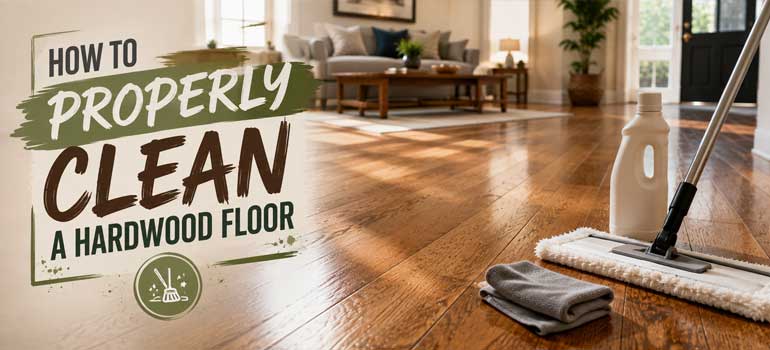
Wood flooring is low-maintenance day to day, but "low-maintenance" only holds up if the basics are done consistently and the right way. A simple, routine keeps a floor looking good for years; the wrong products or tools, even well-intentioned ones, can dull a finish or damage the wood faster than normal wear would.
Prevention comes before cleaning
The easiest way to keep a wood floor clean is stopping dirt from reaching it in the first place. A doormat outside each entrance, ideally a scrubbing mat for shoes, plus an absorbing mat just inside, catches a significant amount of grit and moisture before it ever touches the floor. Rugs placed under heavier furniture and in high-traffic paths add a second layer of protection, and going shoe-free indoors, while it takes some adjustment, cuts down considerably on the grit that causes most fine scratching over time.
The everyday routine
Daily and weekly care doesn't need to be complicated. Sweep or dry-mop with a soft-bristled tool to lift loose dirt and grit before it gets walked into the finish, and use a vacuum with a hard-floor setting or attachment, never a beater-bar brush designed for carpet, which can scuff the surface. For mopping, use a barely damp mop, standing water is one of the fastest ways to damage a wood floor, and always work with a clean mop head, since a mop still carrying grit from a previous clean just drags that grit across the floor again. Spills need immediate attention: blot, don't wipe, and clear liquid away before it has time to sit and stain.
Cleaning differs by finish type
This is the part most cleaning advice skips, but it matters: a lacquered floor and an oiled floor need genuinely different care, and using the wrong approach on either can cause real problems.
| Finish type | Suitable cleaner | What to avoid |
|---|---|---|
| Lacquer (film-forming) | A pH-neutral cleaner made for sealed wood floors | Wax-based polishes, which don't bond to a sealed surface and leave a hazy build-up |
| Oil or hard wax oil | An oil-specific soap cleaner that nourishes as it cleans | Standard lacquer cleaners, which can strip the oil's protective quality over time |
| Any finish | Barely damp mopping, prompt spill removal | Steam mops, which drive moisture into the wood through heat and pressure |
Checking which type of finish your floor has, or asking whoever last serviced it, is worth doing before settling on a cleaning product, since the wrong one won't necessarily damage the floor immediately but will undermine the finish's performance over time.
Products to avoid altogether
A few product categories cause more harm than good regardless of finish type: all-purpose household cleaners, many contain ammonia or detergents not formulated for wood; bleach and abrasive cleaners, which can discolour or physically scratch the surface; and vinegar-based solutions, a popular DIY suggestion that is actually mildly acidic and can dull a finish with repeated use. Sticking to a product genuinely formulated for wood flooring, and matched to your specific finish type, avoids all of these issues at once.
A simple maintenance schedule
Beyond daily sweeping and weekly mopping, a few less frequent tasks keep a floor performing well over the years: checking felt pads under furniture legs every few months and replacing worn ones, giving the floor a deeper clean with a wood-appropriate product every month or two depending on traffic, and considering floor maintenance or a light wood floor polishing once or twice a year to refresh the finish's protective quality between full sands. For oiled floors specifically, a light annual recoat is generally part of the finish's expected upkeep rather than an optional extra.
Even with a careful routine, every wood floor eventually needs a proper wood floor sanding to reset scratches and dulling that daily cleaning alone can't remove. If your floor's finish is looking tired despite good care, get in touch for a free, no-obligation quote and we'll advise honestly on what it needs.
Frequently asked questions
Can I use a steam mop on a wood floor? No, steam mops force moisture into the wood under heat and pressure, which can cause warping, cupping or finish damage regardless of what type of finish the floor has.
Is vinegar and water safe for cleaning wood floors? It's a common suggestion but not ideal. Vinegar is mildly acidic and can dull a floor's finish with repeated use, so a cleaner specifically formulated for wood is a safer choice.
How do I know if my floor is lacquered or oiled? A lacquered floor typically has a more uniform sheen and feels like a smooth film on top of the wood, while an oiled floor has a more matte, natural feel where you can sense the wood grain directly.
How often should an oiled floor be recoated? Most oiled and hard wax oil finishes benefit from a light recoat roughly once a year, which is part of their expected maintenance rather than a sign something's gone wrong.
Will regular cleaning stop a floor from ever needing sanding? No. Good cleaning slows wear significantly, but sanding is still eventually needed to remove scratches and dulling that daily care alone can't reverse.