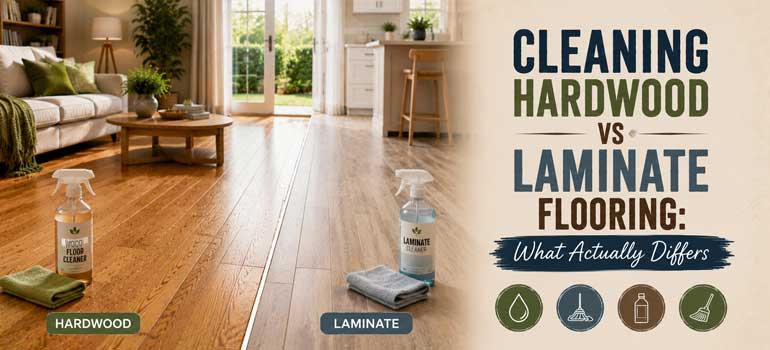
Hardwood and laminate can look almost identical once installed, but they behave very differently when it comes to cleaning, and treating them the same way is one of the more common ways people accidentally damage a floor. The core difference comes down to what each material is actually made of: laminate is a synthetic surface bonded over a composite base, while hardwood is real, porous timber. That distinction shapes almost everything about how each should be cared for.
Why the two materials need different approaches
Laminate's synthetic wear layer is considerably more water-tolerant than real wood, which is why laminate manufacturers generally allow a damp mop with less concern than hardwood requires. Hardwood, being a porous natural material, absorbs moisture readily, and that absorption is what leads to the swelling, cupping and staining that make water the single biggest risk factor for any wood floor. Getting this distinction right from the outset avoids most cleaning mistakes before they happen.
Cleaning laminate flooring
| Step | What to do |
|---|---|
| Daily | Sweep with a fine-bristled broom to prevent grit build-up, which scratches the surface abrasively over time |
| Regular mop | A damp, not soaking, mop with clean warm water is generally fine for laminate |
| Stubborn marks | Use a product specifically designed for laminate rather than a generic multi-surface cleaner |
| Ongoing care | Wipe spills promptly even though laminate tolerates more moisture than hardwood, since standing liquid can still seep into seams between planks |
Laminate's tolerance for water is relative, not absolute. Even though it handles a damp mop better than real wood, excess water pooling in the joints between planks can still cause swelling at the seams over time, so "damp, not wet" remains good practice regardless of material.
Cleaning hardwood flooring
| Step | What to do |
|---|---|
| Daily | Sweep with a fine-bristled broom, or vacuum with a hard-floor attachment that won't scratch the surface |
| Regular mop | Use a barely damp mop, minimising water contact as much as possible |
| Spills | Remove immediately, standing liquid penetrates the finish and can damage the bare wood underneath or leave a stubborn stain |
| Products | Use cleaners formulated specifically for hardwood, matched to whether the finish is lacquer, oil, or wax |
The rule that most consistently gets skipped with hardwood is prompt spill removal. A splash that sits for a few minutes on laminate is rarely a problem, but the same splash on hardwood is already starting to work its way through the finish.
Why product choice matters more with hardwood
Generic multi-surface cleaners from the supermarket are a bigger risk with hardwood than laminate, since many are formulated with a pH or ingredient profile that's fine for sealed synthetic surfaces but can dull or strip a wood finish over repeated use. This is compounded by the fact that hardwood finishes themselves vary, an oil-finished floor and a lacquered floor need different products, whereas laminate's synthetic top layer is far more consistent across brands and doesn't carry that same distinction.
When cleaning alone isn't enough
Good daily habits slow wear on both materials, but they don't eliminate it entirely, and the two respond very differently once wear does show up. Laminate can't be sanded or refinished; once the wear layer is damaged or worn through, the affected planks generally need replacing. Hardwood, by contrast, can be sanded and refinished multiple times over its life, which is one of its genuine long-term advantages over laminate despite the slightly more careful day-to-day routine it demands. If a hardwood floor's finish has dulled or picked up scratches despite good cleaning, wood floor sanding resets the surface entirely rather than requiring replacement.
Keeping either floor looking its best long-term
Beyond the daily routine, both floor types benefit from a few shared habits: felt pads under furniture legs, doormats at entrances to reduce grit tracked in, and prompt attention to any spill regardless of how tolerant the material claims to be. For hardwood specifically, occasional wood floor polishing between full sands helps maintain the finish's protective quality, something laminate simply doesn't have an equivalent option for.
If you're not sure which cleaning products suit your specific floor, or your hardwood is due a refresh, get in touch for a free, no-obligation quote and we'll advise on the right routine and any service your floor might need.
Frequently asked questions
Can laminate be cleaned exactly the same way as hardwood? Not quite. Laminate tolerates more moisture than hardwood, but both still benefit from a damp rather than soaking mop, and hardwood specifically needs immediate spill removal that laminate is more forgiving about.
Why does hardwood need product specifically formulated for it? Hardwood finishes vary by type, lacquer, oil or wax, and each responds differently to cleaning products. Generic cleaners can dull or strip a finish over repeated use in ways laminate's synthetic surface generally won't experience.
Can laminate flooring be sanded like hardwood if it gets scratched? No, laminate's wear layer isn't designed to be sanded and refinished. Damaged planks typically need replacing rather than restoring.
Is vacuuming safe for both hardwood and laminate? Yes, as long as a hard-floor attachment is used rather than a beater-bar brush designed for carpet, which can scratch either surface.
Which flooring type is easier to maintain long-term? Laminate is more forgiving day to day with moisture, but hardwood offers restoration options laminate doesn't, since it can be sanded and refinished multiple times rather than needing replacement once worn.