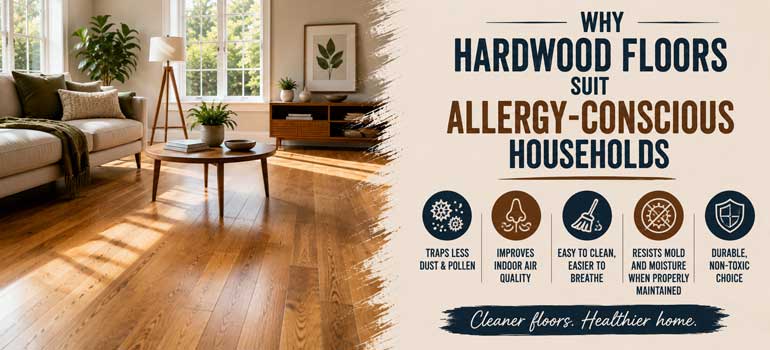
Anyone dealing with seasonal or year-round allergies knows how much daily comfort depends on reducing exposure to dust, pollen and other airborne irritants at home. Flooring choice plays a bigger role in this than many people realise, and it's part of why hardwood is a common recommendation for allergy-conscious households, and a floor covering doctors themselves often choose for exactly this reason.
Why dust and trapped allergens matter so much
Dust is one of the most common domestic sources of allergy symptoms, and it rarely travels alone, pollen, pet dander, dust mite debris and other irritants typically accumulate alongside it. Since it's not realistic to eliminate all dust and allergens from a home entirely, reducing how much accumulates and how easily it can be removed becomes the practical goal, and this is exactly where flooring material makes a measurable difference.
Why hardwood traps less than carpet
Carpet fibres are structurally suited to holding onto dust, dander, pollen and other allergens deep within the pile, well below what a daily vacuum can reliably reach. Hardwood has a smooth, sealed surface with nowhere for these particles to settle into, which means dust and allergens stay on top of the floor rather than working their way into a fibrous structure. This single structural difference is the main reason hardwood consistently comes up in advice for allergy management.
Why cleaning hardwood is more effective, not just easier
Carpet needs frequent, thorough cleaning to keep allergen levels manageable, and even daily vacuuming often isn't enough to reach everything trapped deep in the fibres. Hardwood works differently: because dust and allergens sit on the surface rather than embedded within it, regular vacuuming or dust mopping removes most of what's there, rather than only reaching the top layer of a much deeper problem. This is less about hardwood being lower-maintenance and more about the cleaning that does happen working as intended.
Keeping a hardwood floor allergen-friendly long-term
A few consistent habits keep hardwood performing at its best for allergy management specifically:
- Regular vacuuming with a hard-floor attachment, not a beater-bar brush, removes surface dust effectively without scratching the finish
- A barely damp mop periodically picks up finer dust that dry cleaning alone can miss
- Doormats at entrances reduce how much pollen and outdoor allergens get tracked in on shoes in the first place
- Prompt attention to pet dander, particularly in households with pets, since it settles on hardwood surfaces the same way other dust does and is removed the same way
When a worn finish undermines these benefits
A hardwood floor's allergen advantages depend partly on the finish staying intact, a worn, cracked or heavily scratched surface can develop small crevices where dust and allergens start to collect in ways a smooth, well-maintained finish doesn't allow. If your floor's finish has worn down significantly, wood floor sanding restores that smooth, sealed surface, and regular wood floor cleaning between full sands keeps the finish performing as intended.
If you're considering hardwood for allergy management, or your existing floor needs attention to keep performing well, get in touch and request a free quote and we'll advise on what your specific floor needs.
Frequently asked questions
Is hardwood flooring actually better than carpet for allergies? Hardwood's smooth surface means dust, dander and pollen sit on top rather than becoming trapped deep within fibres the way they do in carpet, which generally makes cleaning more effective at removing what's actually present.
Does hardwood eliminate allergens? No, no flooring material eliminates allergens, but hardwood makes ongoing removal considerably easier and more effective than carpet, which is the practical benefit for allergy management.
How often should a hardwood floor be cleaned for allergy management? Regular vacuuming or dust mopping, ideally daily in busy households, combined with periodic damp mopping, keeps allergen levels consistently low on a hardwood surface.
Can a worn hardwood finish actually make allergy symptoms worse? A significantly worn or cracked finish can develop small crevices where dust and allergens start to collect, reducing the surface's usual advantage, which is worth addressing through sanding and refinishing.
Is engineered wood as good as solid wood for allergy-conscious households? Both have a smooth, sealed surface with the same basic advantage over carpet, so the choice between them comes down to other factors like budget, installation location and durability needs.