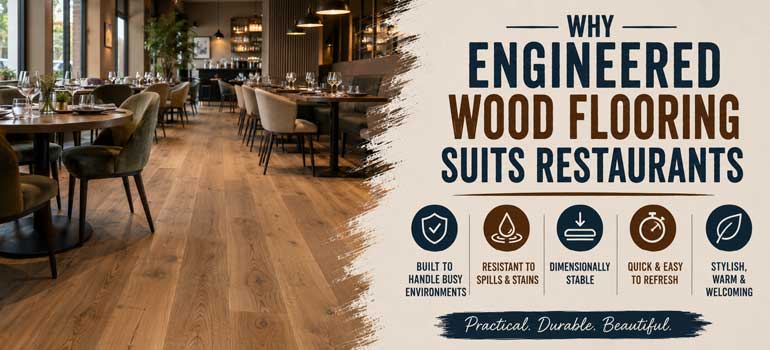
Wood flooring has become the standard in restaurants for good reason: it gives a dining space a warmth and character that carpet, vinyl or laminate can't quite match, while standing up to the specific demands of a commercial food and drink environment. For restaurant owners weighing up flooring options, engineered wood in particular offers a combination of durability, appearance and manageable maintenance that suits the pace of a working kitchen and dining room.
What a restaurant floor actually needs to handle
A restaurant floor faces a different set of demands than a typical retail or office space: constant footfall from both staff and guests, frequent spills, dropped cutlery and crockery, and the need to look presentable through service after service without constant attention. A good restaurant hardwood floor needs a few specific qualities to hold up to this:
- Resistance to heavy footfall and high traffic, since the floor is in near-constant use throughout service hours
- A matt finish, which helps reduce slip risk in a busy environment and is more forgiving of the minor scratches and stains that come with daily restaurant use than a high-gloss finish
- Straightforward maintenance, since restaurant staff need a floor that cleans quickly between services rather than requiring lengthy specialist care
Why engineered wood specifically suits restaurant use
Engineered wood is constructed from layers of hardwood and softwood arranged in a crisscross pattern, a deliberate manufacturing approach that gives it real advantages over solid wood in a demanding commercial setting.
| Consideration | Why engineered wood performs well |
|---|---|
| Durability | The layered, crisscrossed construction resists warping and movement better than solid wood under fluctuating conditions |
| Moisture and temperature resistance | Engineered wood handles the humidity and temperature swings common in food service environments more reliably than solid timber |
| Appearance | Topped with a real hardwood veneer, engineered floors offer the same range of species and finishes as solid wood |
| Long-term restoration | Engineered wood can still be sanded and refinished, though fewer times than solid wood due to the thinner top layer |
Why species and finish choice still matters
Because the visible top layer of engineered wood is real hardwood, restaurant owners aren't limited in style or species choice compared to solid wood, the same range of looks is available. A matt or satin lacquer, such as Bona Traffic HD, is a common choice for restaurant floors specifically because it balances durability with a forgiving surface that doesn't show every mark under bright dining room lighting the way a high-gloss finish would.
Keeping a restaurant floor in good condition
Daily cleaning matters more in a restaurant than almost any residential setting, given the volume of foot traffic and the frequency of spills. A consistent routine of sweeping or dust mopping between services, prompt spot-cleaning of spills, and a proper deep clean during closed hours keeps the floor performing well and looking presentable to guests. Beyond daily care, periodic wood floor polishing between full refinishes helps maintain the finish's protective quality against the concentrated wear a busy dining floor experiences.
When it's time for a refinish
Even with careful daily maintenance, a restaurant floor will eventually show wear from the sheer volume of use it takes on. Wood floor sanding resets a worn engineered floor's surface, and our commercial floor sanding service is built specifically around working with businesses to minimise disruption to operating hours during the process.
If you're planning new flooring for a restaurant, or your existing floor needs refinishing, get in touch and request a free quote and we'll talk through what suits your specific space and service volume.
Frequently asked questions
Is engineered wood durable enough for a busy restaurant floor? Yes, its layered construction is specifically designed to resist the warping and moisture issues that a high-traffic, spill-prone commercial environment can cause more readily in solid wood.
Why is a matt finish recommended over a glossy one for restaurants? Matt finishes help reduce slip risk in a busy service environment and show scratches and minor stains less noticeably than a high-gloss surface would.
Can engineered wood floors in restaurants be refinished like solid wood? Yes, though typically fewer times over their lifespan, since the visible hardwood layer is thinner than a full solid board. A professional assessment can confirm how many refinishes a specific floor has left.
Does a restaurant floor need a different cleaning routine than a home floor? Generally yes, given the higher volume of traffic and spills. A restaurant floor typically needs cleaning between services as well as a proper deep clean during closed hours.
Can restaurant floor sanding be done without closing the business? Commercial floor sanding services can often be scheduled around operating hours or during closed periods to minimise disruption, which is worth discussing directly with your sanding provider.