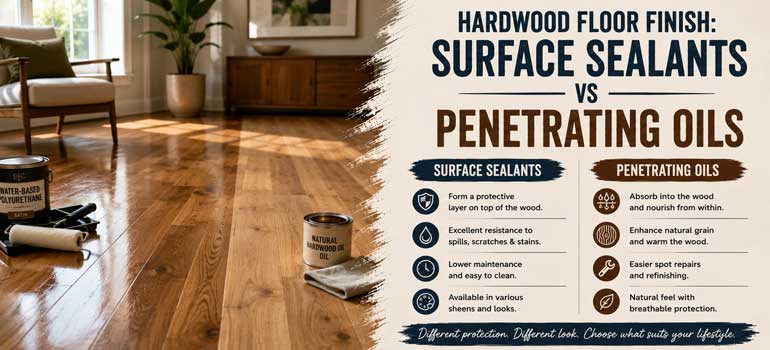
A hardwood floor without a finish isn't fully protected: the finish is what guards the wood against moisture, scratches and daily wear while preserving its colour and grain. Whether the boards arrive prefinished from the factory or get sealed on-site after installation, understanding the two broad finish categories, surface sealants and penetrating oils, is the starting point for choosing the right one for a specific room.
Surface sealants: a protective layer on top
Surface sealants coat the wood, forming a thin but durable barrier between the timber and everything that would otherwise wear it down. This category includes several distinct products, each with real differences in durability, cost and appearance.
| Type | Characteristics | Best suited to |
|---|---|---|
| Shellac | One of the oldest finishes, gives a natural glossy look; less durable than modern alternatives | Lower-traffic rooms where appearance matters more than heavy-duty resistance |
| Varnish | A classic option, works well combined with tints; dries slowly, which can trap dust during application | Budget-conscious projects with patience for a slower application process |
| Lacquer | Water-based lacquers are easy to apply, glossy and durable, though pricier than varnish or shellac | Most residential rooms wanting a reliable, even sheen |
| Urethane | Currently the most popular surface finish, offering strong glossiness and durability | High-traffic areas and anyone prioritising long-term durability |
Urethane itself comes in three variants worth distinguishing: oil-based urethane is inexpensive and easy to apply, water-based urethane is more environmentally friendly and resists yellowing over time, and acid-based urethane dries quickly and holds its colour well over the years. Which variant suits a specific project depends on priorities around cost, application ease, and how the colour should behave long-term.
Penetrating oils: protection from within the wood
Rather than sitting on top of the wood, penetrating oils soak into the timber and fill its pores from within, which gives a more natural look that shows off the wood's texture rather than masking it under a glossy surface film. Three oil types are the standard options:
| Type | Characteristics | Best suited to |
|---|---|---|
| Tung oil | Natural and eco-friendly, easy to apply, but less durable and needs more frequent reapplication | Owners prioritising a natural look who don't mind more regular maintenance |
| Linseed oil | Made from flax, eco-friendly, less water-resistant but easier to spot-repair scratches | Households valuing easy repair over maximum water resistance |
| Danish oil | Often a tung oil and varnish blend, dries quickly and holds up better than pure oils, at a higher cost | A middle ground between oil's natural look and surface sealant durability |
Choosing between the two categories
The core trade-off is straightforward: surface sealants generally offer more durability and a glossier finish, while penetrating oils give a more natural texture and, in most cases, easier localised repair when a scratch or worn patch needs attention. Rooms with heavy foot traffic, hallways, kitchens, busy family living areas, tend to do better with a durable surface sealant like urethane, while lower-traffic spaces where natural texture is a priority often suit an oil finish better.
Getting the finish choice right for your specific floor
Because this decision affects both appearance and long-term maintenance, it's worth discussing your household's actual habits with wood floor maintenance specialists before committing, rather than choosing based on appearance alone. A floor that looks perfect in a showroom sample can behave very differently once it's dealing with daily foot traffic, pets, or spills specific to how your home is actually used.
If you're planning new wood floor sanding and refinishing, or considering a change during recoating, request a free quote and we'll talk through which finish category and specific product suits your room.
Frequently asked questions
Is urethane always the best choice for a hardwood floor? It's a strong, popular option for durability and glossiness, but the right choice depends on priorities. Oil finishes suit those who want a more natural look and don't mind more frequent maintenance.
Can penetrating oil finishes be repaired more easily than surface sealants? Generally yes. Because oil doesn't form a continuous surface film, isolated worn patches can often be spot-treated without needing to refinish the whole floor, unlike some surface sealants.
Why does varnish dry more slowly than other surface sealants? This is a characteristic of the product itself, and it means dust in the air has more opportunity to settle into the finish while it's curing, which is worth planning around during application.
Does water-based urethane really resist yellowing better than oil-based? Yes, this is one of the real differences between the urethane variants, water-based formulas are generally chosen specifically to avoid the yellowing that oil-based urethane can develop over time.
How often do oil finishes need reapplying compared to surface sealants? Oil finishes, particularly tung oil, typically need more frequent reapplication than a durable surface sealant like urethane, which is part of the trade-off for their more natural appearance.