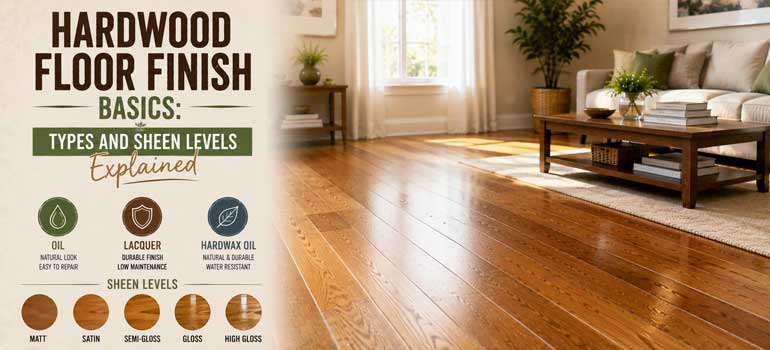
Choosing a hardwood floor finish involves two separate decisions that often get blurred together: what type of product goes on the wood, and how much sheen the final surface has. Both affect how the floor looks, but they also affect how it wears, how it's maintained, and how it protects the timber underneath, which makes this a decision worth more thought than picking whatever looks best in a showroom sample.
Why the finish matters beyond appearance
Once applied, a finish creates the barrier between the wood and everything that would otherwise damage it directly: floor scratches, dents, spills, staining, and general dirt and dust. The look, glossy, matt, or somewhere between, is a factor worth caring about, but it shouldn't be the only one; how the finish performs under your household's actual traffic and habits matters just as much long-term.
The three main finish types
| Type | How it works | Best suited to |
|---|---|---|
| Wax | Sits on the surface, giving a soft natural sheen | Traditional or period properties, lighter-traffic rooms, owners who don't mind more frequent recoating |
| Oil (including hard wax oil) | Penetrates into the wood, protecting from within rather than forming a surface film | Living spaces where natural texture and grain matter, and where spot repair without full refinishing is valued |
| Lacquer | Forms a hard, protective film over the surface | High-traffic areas, family homes, and anyone prioritising low-maintenance durability |
There are also hybrid products that combine properties from more than one category, and options like UV-filtering lacquers add specific protection against sun-related fading on top of the base finish type.
Prefinished versus site-finished boards
Before the finish type and sheen even get chosen, there's a related decision worth mentioning: whether the boards arrive prefinished from the factory or are finished on-site after installation. Prefinished boards offer consistency and save time, while unfinished boards give full control over exactly which finish and sheen get applied, since the choice happens after the floor is already down rather than being locked in before purchase.
Matt, satin, semi-gloss and glossy: how sheen affects upkeep
Sheen level is a separate axis from finish type, a lacquer, an oil, or a wax can each be applied at different sheen levels, though the range available varies by product.
- Matt has become the most popular choice in recent years, giving a natural, understated look. It's also the easiest sheen to keep looking good, since it shows scuffs, dust and minor wear far less than glossier finishes.
- Satin sits between matt and semi-gloss, offering a subtle sheen without the higher-maintenance demands of a fully glossy surface.
- Semi-gloss reflects more light and gives a more polished appearance, at the cost of showing footprints and dust more readily than matt or satin.
- Glossy finishes give the most classic, formal look and were once the default choice, but they've become less common as tastes shift toward natural texture. Gloss is also the hardest sheen to maintain, since every scratch, scuff and speck of dust shows clearly against the reflective surface.
Matching finish and sheen to how the room is actually used
A busy family hallway and a quiet, low-traffic study don't need the same finish decision, even if the wood species and colour are identical. High-traffic areas generally do better with a durable lacquer at a matt or satin sheen, balancing protection with manageable upkeep. Lower-traffic living spaces have more room to prioritise appearance, whether that's the natural texture of an oil finish or the classic look of a higher-sheen lacquer, since the practical wear concerns are less pressing.
Getting professional input before deciding
Because this decision affects both how the floor looks for years and how much maintenance it demands, it's worth discussing your household's actual habits, pets, children, and how often the room gets cleaned with whoever is doing the wood floor sanding or new installation, rather than choosing purely on how a sample looks in a showroom. What works beautifully in a low-traffic display area can behave very differently in a busy family kitchen.
If you're planning a new finish or considering a change during your floor's next wood floor recoating, get in touch for a free, no-obligation quote and we'll talk through the options suited to your specific space.
Frequently asked questions
Is matt finish really easier to maintain than glossy? Yes, matt finishes show scuffs, dust and minor wear far less noticeably than glossy ones, which is a big part of why matt has become the more popular choice for busy households.
Can I change my floor's sheen level without changing the finish type? Often yes, many finish types are available across a range of sheens, so it's possible to switch from, say, semi-gloss to matt within the same lacquer or oil product line during a refinish.
Which finish type is best for a home with pets? Lacquer generally offers the most straightforward durability for households with pets, though oil finishes have the advantage of easier spot repair if scratching does occur in one area.
Do prefinished boards limit my sheen options? They can, since you're choosing from the manufacturer's available finishes rather than a fully open custom application. Unfinished boards give more flexibility if a specific sheen matters to you.
Is glossy finish making a comeback, or is matt here to stay? Current trends favour matt and satin sheens for their natural look and easier upkeep, though finish preferences do shift over time and glossy remains available for those who prefer it.