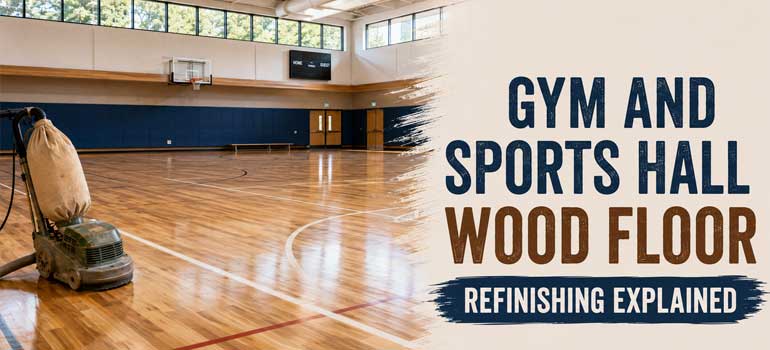
Wood is the default choice for gym and sports hall floors for a reason: it combines durability with the specific shock absorption and consistent bounce that sports flooring needs, properties that make it far better suited to high-impact, high-traffic use than most alternatives. But that heavy use comes at a cost. Gym floors face far more concentrated wear than a typical domestic floor, which makes regular maintenance and, eventually, refinishing a genuine necessity rather than an occasional nice-to-have.
Why gym floors need more frequent attention
The specific demands of a sports environment accelerate wear in ways a residential floor rarely experiences: repeated impact from sports and exercise equipment, constant footfall across the same paths, moisture from sweat and cleaning, and the scuffing from trainers and equipment being dragged or dropped. School gyms, community centre halls, and private fitness facilities all face this same pattern, and regular wood floor maintenance is what keeps a floor performing safely and looking presentable between the more involved refinishing cycles.
Screening and coating: the lighter option
For floors showing only minor wear, dulling, light scuffing, a slightly tired appearance, screening and coating is often enough to bring the surface back without the cost and time of a full refinish. Rather than stripping the floor down to bare wood, this process involves cleaning and lightly buffing the surface to remove minor imperfections, then applying a fresh topcoat for renewed shine and protection. It's a faster, less disruptive option that suits facilities that can't easily close for an extended period.
Complete refinishing: for more significant wear
Where a gym floor has deeper scratches, worn-through finish, staining, or damage beyond what screening can address, a full refinish is the more appropriate route. This starts with wood floor sanding, which removes the old, damaged finish along with any scratches and staining down to bare wood, leaving a smooth, level surface ready for sealing, and staining if a colour change is wanted. Full refinishing takes longer and costs more than screening, but it's the only option once wear has gone beyond the surface level.
Choosing between the two: a quick comparison
| Consideration | Screening and coating | Complete refinishing |
|---|---|---|
| Suited to | Minor dulling, light scuffing | Deep scratches, worn-through finish, staining |
| Process | Clean, buff, new topcoat | Full sand to bare wood, then seal |
| Time and cost | Lower, faster turnaround | Higher, more involved |
| Facility downtime | Shorter | Longer |
A professional assessment is the most reliable way to know which category a specific floor falls into, since wear that looks similar from a distance can require very different levels of work depending on how deep it actually goes.
Adding custom graphics and court markings
Refinishing is also a practical moment to add custom touches: a facility logo, mascot, or name, or, for floors used for a specific sport, regulation court lines and boundary markings. Since the floor is already being worked on and sealed, adding these elements at this stage means they're integrated into the finish itself rather than applied as a separate, less durable overlay later.
Keeping a gym floor in good condition between refinishes
Beyond the periodic screening or full refinish, day-to-day habits make a real difference to how long a gym floor lasts between treatments. Regular sweeping and dust mopping to keep grit from scratching the surface, mats at entrances to reduce what's tracked in, and prompt attention to spills or sweat exposure all reduce the pace of wear considerably. Equipment that's dragged rather than lifted is one of the more avoidable sources of deep scratching worth addressing through facility policy as much as through floor care itself.
If your gym or sports hall floor is due for attention, get a free quote and we'll assess whether screening or a full refinish is the right fit, and talk through any custom markings or graphics you'd like included.
Frequently asked questions
How often does a gym floor typically need refinishing? This varies significantly with usage intensity, but high-traffic facilities often need attention more frequently than a typical domestic floor, sometimes annually for screening with less frequent full refinishes.
Can screening be done without closing the facility for long? Yes, screening and coating is generally faster and less disruptive than a full refinish, making it a more practical option for facilities that can only close briefly.
Is it possible to add court lines during a routine refinish? Yes, custom graphics, logos, and regulation court markings can be added as part of the refinishing process, integrating them into the new finish rather than applying them separately afterward.
Does the type of sport played on the floor affect maintenance needs? Yes, higher-impact sports and equipment-heavy activities generally accelerate wear more than lighter use, which can affect how often screening or refinishing is needed.
How do I know if my gym floor needs screening or a full refinish? A professional assessment is the most reliable way to tell, since deeper damage isn't always obvious from a visual check alone and the two services address very different levels of wear.