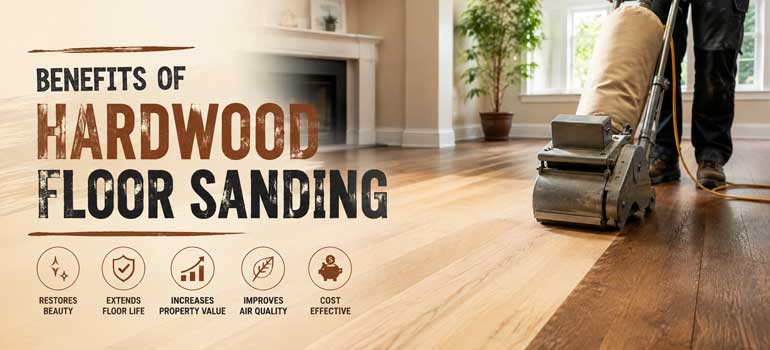
We sand, repair and refinish solid wood floors across London, and one question comes up in almost every visit: is sanding actually necessary, or is it just a cosmetic upsell? The short answer is that solid wood is one of the only flooring materials that can be sanded back and refinished multiple times over its life, which is exactly what makes it worth the investment in the first place. A worn, scratched or dull hardwood floor usually isn't damaged beyond repair; it just needs the top layer removed and a new finish applied.
Why solid wood floors can be restored instead of replaced
Solid wood boards are made from a single piece of timber all the way through, typically somewhere between 18mm and 22mm thick, rather than a thin veneer bonded to a base layer. That thickness is what allows a floor to be sanded down several times across its lifespan, usually every 7 to 10 years depending on foot traffic, without running out of material. Each sand removes only a fraction of a millimetre of wood, so a well-maintained solid floor in a period London property can realistically be refinished for well over a century.
This is the main practical difference between solid wood and engineered or laminate flooring. Engineered boards have a real wood veneer over a plywood base, so they can usually only be sanded once or twice before the veneer runs out. Laminate can't be sanded at all. If longevity and the ability to restore rather than replace matter to you, solid wood is the material built for that.
Signs a solid wood floor needs sanding
A floor is usually ready for sanding when the lacquer or oil finish has worn through in high-traffic areas (in front of doorways, along hallways, under desk chairs) and the bare wood underneath starts to look grey, dry or blotchy. Other signals include visible scratches that catch fingernails, water marks or dark staining from spills, small gaps opening up between boards as the wood dries out, and a general dulling of colour compared to areas that get less foot traffic. None of these on their own mean the floor is damaged; they mean the protective finish has broken down and the wood underneath needs resealing.
What the sanding process actually involves
Sanding removes the old, worn finish and a very thin layer of the wood surface using progressively finer grits, which levels out scratches, stains and unevenness before a new finish goes on. We use dust-free sanding equipment, which connects extraction directly to the sanding machine so dust is pulled away as it's created rather than settling on furniture and soft furnishings throughout the property.
Once the boards are sanded back to bare, clean wood, any gaps between boards can be filled, loose or damaged boards repaired, and the colour adjusted if you want a different shade than the floor currently has. The final step is applying the new finish, and this is the stage that determines how the floor performs day to day, not just how it looks.
Choosing a finish
Lacquer and oil are the two main options, and each suits a different kind of household. Lacquers such as Bona Traffic HD or Junckers HT700 sit on top of the wood as a hard-wearing seal, giving a consistent sheen and strong resistance to scuffs, which tends to suit busier family homes and hallways. Oils such as Loba WS Fusion 2K or products from the Osmo range soak into the wood rather than sitting on the surface, giving a more natural matte finish that's easier to spot-repair in a single worn patch without resanding the whole floor. Neither is objectively better; it comes down to how much wear the floor takes and how much maintenance you want to do.
How often solid wood floors can be sanded
There's no fixed number, but as a rough guide, most solid wood floors can be sanded somewhere between 4 and 8 times over their lifespan, depending on the original board thickness and how much wood is removed at each sand. A light, maintenance sand that only addresses surface dulling removes far less material than a full sand needed to fix deep scratches or old, thick layers of varnish, which is why getting a professional assessment before sanding matters: sanding more aggressively than a floor needs shortens its lifespan unnecessarily.
Why choose a professional sanding service
Sanding solid wood is not a straightforward DIY job. Uneven sanding leaves visible lines or dips in the floor, and any imperfections left in the wood surface get highlighted, not hidden, once stain and finish go on. A professional service brings dust-free machinery, the experience to judge how much material a floor can safely lose, and access to trade finish products like Bona, Loba and Junckers that give a more durable result than most retail alternatives.
If you're unsure whether your floor needs a light refresh or a full sand and refinish, our floor sanding team can assess it and talk through the options, or you can look at what a solid wood floor sanding project typically involves before booking. Get in touch for a free, no-obligation quote and we'll advise honestly on whether sanding is the right move for your floor.
Frequently asked questions
Can solid wood floors really be sanded more than once? Yes. Because solid boards are the same wood all the way through, most can be sanded 4 to 8 times over their lifespan before the boards become too thin to sand safely again.
Does sanding remove all scratches from a wood floor? Sanding removes surface-level scratches and general wear effectively. Deep gouges that go into the board itself may need a board repair or replacement alongside sanding, rather than sanding alone.
Is dust a problem during sanding? Not with dust-free extraction equipment, which pulls dust away at the point it's created rather than letting it settle across the room and surrounding furniture.
How long does a newly sanded floor take to cure before use? This depends on the finish used. Oil-based finishes generally need longer to cure fully than lacquers, so timing varies by product; your sanding team should confirm this for the specific finish chosen.
Should I choose lacquer or oil when refinishing? Lacquer gives a tougher, more uniform surface that suits high-traffic areas. Oil gives a more natural matte look and allows easier spot repairs later. The right choice depends on the room and how the floor is used day to day.